
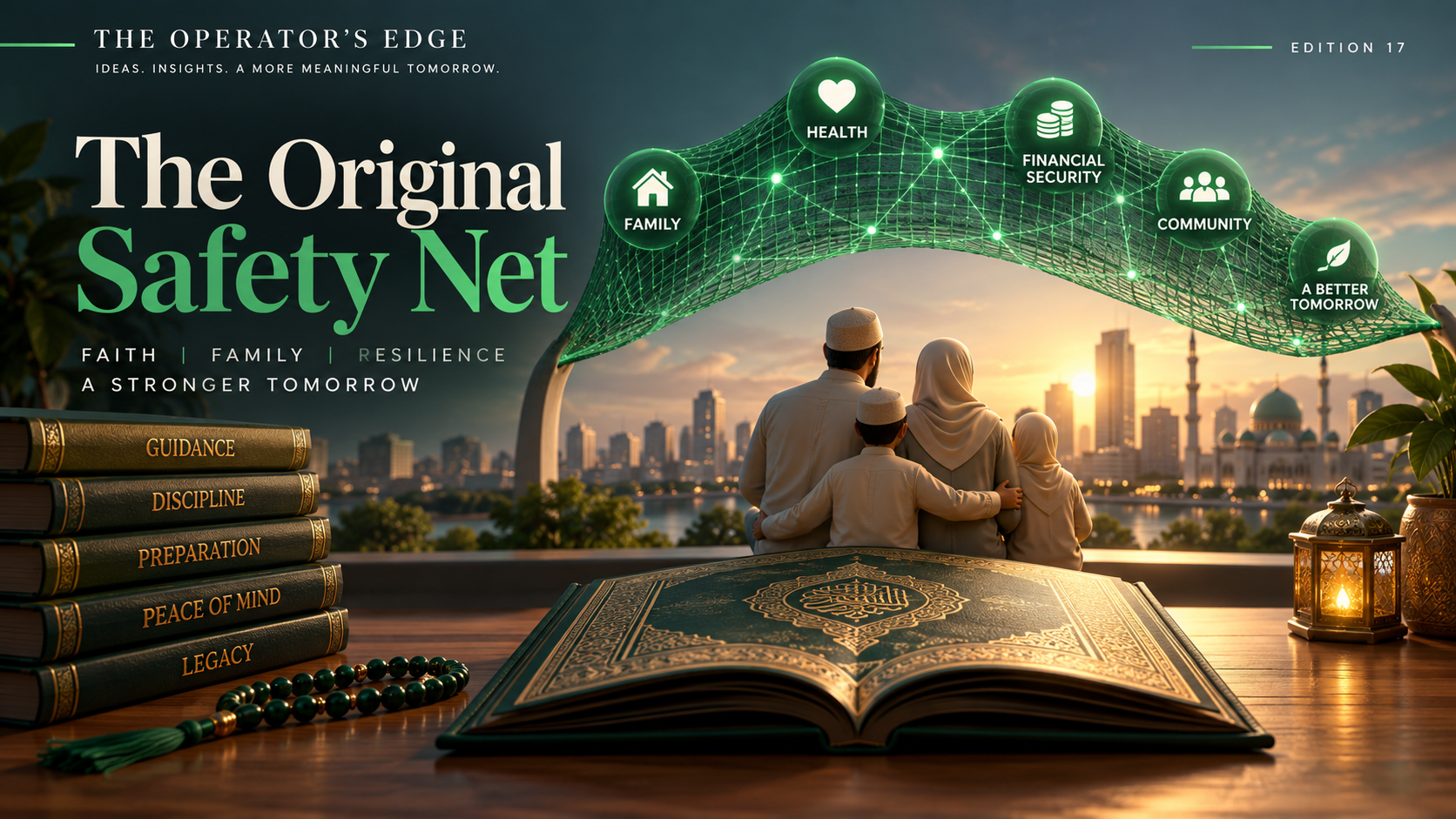
The Original Safety Net

The Original Safety Net

The Original Safety Net | The Operator's Edge — Edition 17
The Operator's Edge  ·  The Believer's Ledger  ·  November 2026
Edition 17 · Sixth of The Believer's Ledger — Closing the Founding Arc  ·  A companion to Edition 12 & Editions 13–16
Bangladesh · The Safety Net Nobody Calls a Safety Net

The Original
Safety Net

Eight in ten Bangladeshi workers have no employer pension, no unemployment insurance, no formal safety net of any kind. They have something older and mostly undocumented instead: a family. This edition closes The Believer's Ledger's founding arc by asking what happens when that system — quietly running the actual economics of most Bangladeshi lives — comes under the same pressures this series has spent five editions describing.

Published: November 2026
Series: The Operator's Edge · The Believer's Ledger, No. 6
Edition: 17
Read time: ~18 minutes

Edition 12 opened this series by describing a generation raised on a broken promise: study hard, get a degree, build a life. The editions since have each examined one piece of financial ethics — debt, zakat, waqf, amanah — as if they were separate rooms in the same house. They aren't. They're all functions the family was, historically, built to perform: lending without interest, redistributing to whoever needed it most, endowing something that outlasts you, holding what's entrusted with integrity. This edition asks what happens to a country when the institution running all of that quietly comes under strain — and what a family can still choose to be, even now.

۞   ۝   ۞
01 /

What the Qur'an Places First

Before the family is a source of comfort, the Qur'an treats it as the first item on a list of financial obligations.

يَسْـَٔلُونَكَ مَاذَا يُنفِقُونَ ۖ قُلْ مَآ أَنفَقْتُم مِّنْ خَيْرٍ فَلِلْوَٰلِدَيْنِ وَٱلْأَقْرَبِينَ وَٱلْيَتَـٰمَىٰ وَٱلْمَسَـٰكِينِ وَٱبْنِ ٱلسَّبِيلِ ۗ وَمَا تَفْعَلُوا۟ مِنْ خَيْرٍ فَإِنَّ ٱللَّهَ بِهِۦ عَلِيمٌ
"They ask you, [O Muhammad], what they should spend. Say, 'Whatever you spend of good is [to be] for parents and relatives and orphans and the needy and the traveler. And whatever you do of good — indeed, Allah is Knowing of it.'"
Sūrat al-Baqarah 2:215 · Sahih International

Notice the order. Not charity in the abstract, starting with strangers — parents first, then relatives, then the wider circle of orphans, the needy, and travelers. The Qur'an does not treat family obligation as competing with charity; it treats family as charity's starting point, the first and nearest claim on whatever a person has to give.

۞   ۝   ۞
02 /

What a Family Actually Provides — Economically

Call it what it actually is: for most Bangladeshis, the family is not a sentimental unit that happens to also help out financially. It is the primary, and often only, functioning economic institution in their lives.

It is a pension system. Historically, the overwhelming majority of older Bangladeshis lived with or beside an adult son, who became, in practice, their retirement plan — no employer contribution required, no vesting period, no formal contract, just an inherited obligation that functioned as one anyway.

It is an insurance system. When a medical emergency, a bad harvest, or a job loss hits a household with no employer safety net, the first call is rarely to an institution. It's to a sibling, a parent, an uncle — the people who will lend without collateral, forgive without lawyers, and absorb a shock that would otherwise be catastrophic.

It is a remittance engine. Over ten million Bangladeshis work abroad, sending home more than $30 billion a year — 6.57% of GDP, financing nearly half the country's import bill. This is not passive income. It is thousands of individual family decisions to split a household across borders, absorbing years of separation, so that the family unit back home can function economically at all.

It is an education and marriage fund. Long before any child qualifies for a student loan or takes out a mortgage, it is usually a family — parents, sometimes an uncle, sometimes pooled sibling contributions — financing tuition, dowry, or a first home, on terms no bank would ever offer: no interest, no fixed repayment schedule, no credit check.

None of this shows up in a GDP calculation. All of it is, functionally, financial infrastructure.

۞   ۝   ۞
03 /

Bangladesh's Family Economy, in Numbers

80.8%
Of Bangladesh's labor force in
informal employment
Wikipedia / BBS Labour Force Survey, 2024
6.57%
Of GDP sent home in remittances
by 10M+ workers abroad
Bangladesh Bank / East Asia Forum, 2026 · ~47% of import payments
8M → 44M
Bangladesh's population aged 60+,
today vs. 2050 projection
Health Science Reports, 2025
19.2%
Of Bangladeshis below the
national poverty line
National poverty data, 2025

Read together, these numbers describe a country running most of its actual social security through family relationships rather than formal institutions — at exactly the moment those relationships are being stretched thinnest, across borders, across generations, and across a shrinking number of people expected to carry more.

۞   ۝   ۞
04 /

Why the Old Model Is Under Real Strain

None of this is nostalgia for a golden age that worked perfectly. It's a description of a system now under genuine pressure from several directions at once.

Urbanization and migration are the most visible drivers. Nuclear households now dominate Dhaka, Chittagong, and Sylhet, and researchers studying rural Bangladesh have documented a related, less-discussed cost: as compound family households split into separate homes, agricultural land gets consumed by new construction — a country with limited arable land quietly losing more of it to the physical footprint of family fragmentation.

The remittance economy, for all it provides, extracts its own price: fathers, husbands, and sons who become, for years at a stretch, a monthly transfer rather than a presence at the dinner table — the same tension Edition 13 named in the context of household debt.

And the traditional support model was never distributed evenly. Historical research on elderly support in Bangladesh found that the near-universal pattern of living with an adult son held far less reliably among economically poorer households — meaning the families with the least capacity to absorb a shock were also the ones least likely to have this safety net functioning for them in the first place.

The state has begun, tentatively, to respond: Bangladesh recently launched a Universal Pension Scheme, aiming to give citizens a path to self-funded retirement independent of family support. It is a genuinely useful acknowledgment that the old model can't be assumed to hold — but it remains new, its coverage limited, and nowhere close to replacing what family support has quietly provided for generations.

۞   ۝   ۞
05 /

Closing the Loop — What This Series Has Actually Been About

Read back across this series, and a pattern becomes hard to miss: every institution examined so far is, at root, a family function that scaled up — or should have.

Debt (Edition 13) asked what it would take to replace interest-bearing loans with qard hasan, interest-free lending. The oldest, most natural version of qard hasan is a parent lending a child money for a wedding, or a sibling covering another sibling's shortfall — no interest, no collateral, because the relationship itself is the collateral.

Zakat (Edition 14) named eight categories of rightful recipients, but Islamic jurisprudence has always recognized that a person's own poor relatives are often the most deserving recipients of all — zakat given to family, where permissible, counts twice: once as charity, once as maintaining the kinship ties the Prophet ﷺ tied directly to increased provision and a longer life.

Waqf (Edition 15) asked what it means to build something that outlives you. A family, at its best, already is one — an endowment of relationships, obligations, and inherited responsibility that a single generation neither fully built nor is entitled to fully spend down.

Amanah (Edition 16) asked what trust actually demands at every level of a person's life — and named family, second only to personal conduct, as one of its primary arenas: a parent's savings, a sibling's inheritance, a child raised to understand the difference between what's legal and what's owed.

The family was never a separate topic from the rest of this series. It was the original scale at which every one of these obligations was first practiced, long before there was a bank, a zakat board, a waqf administrator, or a national anti-corruption strategy to formalize any of it.

۞   ۝   ۞
06 /

Why This Isn't an Argument for the Old Joint Family, Uncritically

It would be easy to read all of this as a call to simply rebuild the traditional joint family system, and that would be a mistake worth naming directly.

Joint family structures, whatever their economic strengths, have also reliably constrained personal autonomy — particularly for women, whose labor, income, and life choices have often been subordinated to a collective decision-making structure they had limited power to shape. Researchers studying Bangladesh's shift toward nuclear families have also documented real costs to the old model: reinforced conservative norms, reduced individual freedom, and — bluntly — family structures that have sometimes protected abusive or exploitative relatives simply because "family" made confronting them harder, not easier.

What this edition is arguing for is narrower than "go back." It's the deliberate reconstruction of the function — mutual economic support, shared responsibility for the vulnerable, honest and open financial planning — inside whatever family structure a household actually chooses, nuclear or extended, without requiring anyone to surrender the real gains in autonomy, safety, and individual dignity that moving away from some older arrangements has genuinely delivered.

۞   ۝   ۞
07 /

What a Family Can Actually Build Today

Step
One

Have the elder-care conversation before the crisis, not during it

Who will provide support, in what form, funded how — decided calmly in advance is a fundamentally different conversation than the same questions asked during a medical emergency.

Step
Two

Formalize the family lending circle instead of leaving it awkward and ad hoc

A family that already lends to itself informally can adopt the same qard hasan discipline Edition 13 described for community lending — written terms, a repayment plan, and freedom from the resentment that comes from money moving without any shared understanding of the terms.

Step
Three

Teach children shared responsibility, not just individual achievement

A generation raised entirely on "your grades, your career, your success" inherits little instinct for "our family's obligations" — and that instinct, once lost, is difficult to rebuild in a single generation.

Step
Four

Write down inheritance, waqf intentions, and financial wishes while everyone can still discuss them calmly

This is what Editions 15 and 16 already argued for. Silence is not neutral; it is simply a decision to let a crisis do the deciding later.

Step
Five

Pool family zakat and sadaqah toward one relative's complete stability

As Edition 14 argued, this beats scattering small, well-meaning gifts that never quite solve anything. A family's own poor relatives are often its most overlooked, most deserving recipients.

۞   ۝   ۞
08 /

The Honest Caveats

This edition is not arguing that family obligation should override every individual's right to safety, autonomy, or escape from a genuinely harmful relationship. "Family" is sometimes invoked to justify exactly the kind of exploitation and control this series has spent five editions describing at the national level — and a family member who weaponizes obligation to extract money, labor, or compliance from someone with no real power to refuse is practicing a private-scale version of the same amanah violation Edition 16 named in banks and government offices.

Nor is this an argument that individual ambition and family obligation are natural enemies. A generation that left rural households for urban careers, or Bangladesh for opportunity abroad, did not betray the family economy — in most cases, it built the remittance economy that keeps it running. The point is not individual achievement versus collective responsibility. It's ensuring the second doesn't quietly disappear while pursuing the first.

۞   ۝   ۞
09 /

The Policy Ask — Building Infrastructure Alongside Family, Not Instead of It

Expand and simplify the Universal Pension Scheme's coverage, particularly for the 80.8% of the workforce in informal employment who have historically had no path into any contributory system at all. A scheme that only reaches the formally employed minority replicates the exact inequality Edition 14 described in zakat distribution: help concentrated where it's easiest to deliver, not where it's most needed.

Invest in elder-care infrastructure that supplements family capacity rather than assuming it's unlimited. Community-based day-care for aging parents, home health visits, and subsidized respite care let working-age adults remain economically active without forcing a binary choice between career and caregiving — a choice most families in this series's target readership will eventually face.

Recognize caregiving in formal labor policy. Flexible work arrangements and caregiving leave, standard in some economies, remain rare in Bangladesh's formal employment sector — leaving even the minority with formal jobs poorly equipped to combine paid work with the family obligations this edition has described.

The caveat, as always: none of this should be read as government replacing family. It's infrastructure sized to genuinely supplement a system that has been carrying more than its share for longer than anyone has been counting.

۞   ۝   ۞
10 /

Conclusion — The Operator's Take

Edition 12 began this series describing a generation told that individual effort — a degree, a job, patience — was the whole contract. Six editions later, the honest picture is more complete: individual effort was always going to run through a family, whether that family was healthy, strained, absent, or scattered across three countries sending money home every month.

The Qur'an closes its own reflection on family with a request that reads less like an obligation and more like a hope:

وَٱلَّذِينَ يَقُولُونَ رَبَّنَا هَبْ لَنَا مِنْ أَزْوَٰجِنَا وَذُرِّيَّـٰتِنَا قُرَّةَ أَعْيُنٍ وَٱجْعَلْنَا لِلْمُتَّقِينَ إِمَامًا
"Our Lord, grant us from among our wives and offspring comfort to our eyes, and make us leaders for the righteous."
Sūrat al-Furqān 25:74 (partial) · Sahih International

Not a burden to be managed, but a comfort to be built — deliberately, across debt handled honestly, zakat kept close to home before it travels further, an endowment intended to outlast its founder, and a trust nobody has to be forced to keep. Bangladesh does not need to invent any of this. It has been running, informally and mostly unacknowledged, in thousands of households for generations. What this series has argued, edition after edition, is simply that the informal version deserves to become deliberate — practiced with the same seriousness this series has asked of a bank, a zakat fund, a waqf estate, and a government office. The family was the original ledger. It's worth keeping one on purpose.

— Mustafizur Rahman Shazid
CEO · Board Director · Strategic Advisor
Houston, Texas · Dhaka, Bangladesh

A question for you, to close this arc of the series: is there a financial conversation your own family has been putting off — about elder care, inheritance, or who supports whom when things go wrong? What would it take to have it now, deliberately, rather than during the next crisis? I welcome the conversation.

Glossary — Terms Used in This Article

Every Arabic and technical term in this article is defined here in full.

Qur'anic & Devotional Terms

Qarḍ Ḥasan قرض حسن
A "goodly loan" — an interest-free loan given purely for the benefit of the borrower. Covered in depth in Edition 13.
Zakat زكاة
Obligatory almsgiving, one of the five pillars of Islam, with eight recognized categories of eligible recipients (Q9:60). Covered in depth in Edition 14.
Waqf وقف
An inalienable Islamic endowment, dedicating an asset's benefit in perpetuity. Covered in depth in Edition 15.
Amanah أمانة
Trust — anything entrusted to a person, whether property, responsibility, or confidence, that must be honored with integrity. Covered in depth in Edition 16.

Economic & Social Terms

Universal Pension Scheme
Bangladesh's national self-funded pension program, launched to extend retirement savings options beyond formal-sector employees.
Informal Employment
Work without a formal employment contract, employer-provided benefits, or legal labor protections — the category covering roughly four in five Bangladeshi workers.
Remittance
Money sent home by a worker living or working abroad, a major source of foreign currency and household income in Bangladesh.

Sources & References

Scriptural

  1. 01The Qur'an — Sahih International translation. New in this edition: Q2:215, Q25:74. Companion-edition callbacks reference qard hasan (Edition 13), the eight zakat categories at Q9:60 (Edition 14), waqf's permanence theme at Q16:96 (Edition 15), and amanah's trust framing at Q33:72 and Q4:58 (Edition 16) — not re-quoted in full here.

Bangladesh Family & Demographic Data

  1. 02Wikipedia — Economy of Bangladesh summary, citing BBS Labour Force Survey 2024 (80.8% informal employment) and national poverty data 2025 (19.2% below poverty line)
  2. 03East Asia Forum — "Bangladesh's expatriate earnings mask structural weakness," December 2025/2026; Bangladesh Bank (remittances: 6.57% of GDP, $30B+, 10M+ workers abroad, ~47% of import payments)
  3. 04Health Science Reports — "Aging in Bangladesh: A Wake-Up Call," 2025 (elderly population projection 8M → 44M by 2050; traditional elder co-residence pattern and its decline among poorer households, citing Cain's earlier research)
  4. 05The Daily Star — "What's giving rise to more nuclear families in rural Bangladesh?" (nuclear family growth, land fragmentation)
  5. 06ResearchGate — "The Changing Role of Family Structures in Urban and Rural Bangladesh," 2025; "The Decline of Extended Family Culture in Bangladesh," 2025 (joint family costs: autonomy, gender dynamics)
  6. 07Springer Nature (2026) — chapter on long-term elder care in Bangladesh (Universal Pension Scheme)

Companion Editions

  1. 08The Operator's Edge — "The Shape of the Problem," The Believer's Ledger No. 1, Edition 12
  2. 09The Operator's Edge — "The Debt Economy," The Believer's Ledger No. 2, Edition 13
  3. 10The Operator's Edge — "The Widening Circle," The Believer's Ledger No. 3, Edition 14 (zakat)
  4. 11The Operator's Edge — "The Waqf Vacuum," The Believer's Ledger No. 4, Edition 15
  5. 12The Operator's Edge — "The Trust Deficit," The Believer's Ledger No. 5, Edition 16 (amanah)
বাংলাদেশ · যে আশ্রয়কে কেউ আশ্রয় বলেই ডাকে না

প্রথম
আশ্রয়

বাংলাদেশের প্রতি দশজন শ্রমজীবীর মধ্যে আটজনেরই নেই কোনো কোম্পানির পেনশন, নেই বেকারত্বের বিমা, নেই কোনো প্রাতিষ্ঠানিক সুরক্ষা। তার বদলে তাদের আছে আরও পুরনো, আরও অলিখিত একটা ব্যবস্থা, পরিবার। দ্য বিলিভারস লেজার সিরিজের গোড়াপত্তনের পর্বটা এই সংখ্যায় এসে শেষ হচ্ছে, প্রশ্নটা তাই এখানেই তোলা দরকার, বাংলাদেশের অধিকাংশ মানুষের জীবনের প্রকৃত অর্থনীতি যে ব্যবস্থাটা নিঃশব্দে চালিয়ে নিয়ে যায়, সেটার উপর যখন এই সিরিজের গত পাঁচটা সংখ্যায় বর্ণিত একই চাপগুলো এসে পড়ে, তখন কী হয়।

প্রকাশ: নভেম্বর ২০২৬
সিরিজ: The Operator's Edge · The Believer's Ledger, সংখ্যা ৬
সংস্করণ: ১৭
পঠনকাল: ~১৮ মিনিট

বারো সংখ্যা এই সিরিজের শুরুটা করেছিল এমন এক প্রজন্মের গল্প দিয়ে, যাদের একটা ভাঙা প্রতিশ্রুতির উপর বড় করা হয়েছিল, খেটেখুটে পড়াশোনা করো, একটা ডিগ্রি নাও, একটা জীবন গড়ো। তারপরের প্রতিটা সংখ্যা আর্থিক নীতিশাস্ত্রের একেকটা অংশ নিয়ে আলাদা করে কথা বলেছে, ঋণ, যাকাত, ওয়াকফ, আমানত, যেন এগুলো একই বাড়ির আলাদা আলাদা ঘর। আসলে তা না। এই প্রতিটা জিনিসই পরিবার নামের প্রতিষ্ঠানটা ঐতিহাসিকভাবে যা করার কথা ছিল তারই একেকটা কাজ, সুদ ছাড়া ধার দেওয়া, যার যেখানে দরকার সেখানে পুনর্বণ্টন করা, নিজের চেয়ে দীর্ঘজীবী কিছু একটা গড়ে তোলা, যা গচ্ছিত রাখা হয়েছে তা সততার সাথে ধরে রাখা। এই সংখ্যা জিজ্ঞেস করছে, একটা দেশের কী হয় যখন এসবকিছু নিঃশব্দে চালিয়ে নেওয়া প্রতিষ্ঠানটাই চাপের মুখে পড়ে, আর এখনও একটা পরিবার কী হয়ে থাকতে বেছে নিতে পারে, এখনও।

۞   ۝   ۞
০১ /

কুরআন সবার আগে যাকে রাখে

পরিবার একটা আরামের জায়গা হওয়ার আগেই, কুরআন একে আর্থিক দায়বদ্ধতার তালিকায় প্রথম স্থানে রাখে।

يَسْـَٔلُونَكَ مَاذَا يُنفِقُونَ ۖ قُلْ مَآ أَنفَقْتُم مِّنْ خَيْرٍ فَلِلْوَٰلِدَيْنِ وَٱلْأَقْرَبِينَ وَٱلْيَتَـٰمَىٰ وَٱلْمَسَـٰكِينِ وَٱبْنِ ٱلسَّبِيلِ ۗ وَمَا تَفْعَلُوا۟ مِنْ خَيْرٍ فَإِنَّ ٱللَّهَ بِهِۦ عَلِيمٌ
"তারা আপনাকে জিজ্ঞেস করে, তারা কী ব্যয় করবে। বলুন, তোমরা যে সম্পদই ব্যয় করো, তা হোক পিতামাতা, আত্মীয়স্বজন, ইয়াতিম, অভাবগ্রস্ত আর মুসাফিরের জন্য। আর তোমরা যা কিছু ভালো করো, আল্লাহ নিশ্চয়ই তা জানেন।"
সূরা আল-বাকারা ২:২১৫ · বাংলা তরজমা (সহীহ ইন্টারন্যাশনাল অবলম্বনে)

ক্রমটা লক্ষ করার মতো। বিমূর্ত কোনো দান দিয়ে শুরু না, অপরিচিতদের দিয়ে শুরু না, বরং আগে পিতামাতা, তারপর আত্মীয়স্বজন, তারপর ইয়াতিম-অভাবগ্রস্ত-মুসাফিরের বৃত্তটা আরেকটু প্রশস্ত হয়। কুরআন পারিবারিক দায়বদ্ধতাকে দানের প্রতিদ্বন্দ্বী হিসেবে দেখায় না, বরং পরিবারকেই দানের শুরুর বিন্দু হিসেবে দেখায়, একজন মানুষের হাতে যা আছে তার উপর প্রথম আর সবচেয়ে কাছের দাবিটা।

۞   ۝   ۞
০২ /

একটা পরিবার আসলে অর্থনৈতিকভাবে কী দেয়

ব্যাপারটাকে যা আছে সেভাবেই বলা ভালো, বেশিরভাগ বাংলাদেশির কাছে পরিবার নিছক একটা আবেগের জায়গা না, যেটা পাশাপাশি একটু আর্থিক সাহায্যও করে। এটাই তাদের জীবনের প্রধান, প্রায়ই একমাত্র, সচল অর্থনৈতিক প্রতিষ্ঠান।

এটা একটা পেনশন ব্যবস্থা। ঐতিহাসিকভাবে, বয়স্ক বাংলাদেশিদের সিংহভাগই থেকেছেন একজন প্রাপ্তবয়স্ক ছেলের সাথে বা তার কাছাকাছি, যিনি বাস্তবে হয়ে উঠতেন তাদের অবসরকালীন পরিকল্পনা, কোনো কোম্পানির চাঁদা লাগে না, কোনো ভেস্টিং পিরিয়ড নেই, কোনো লিখিত চুক্তি নেই, শুধু একটা উত্তরাধিকারসূত্রে পাওয়া দায়িত্ব, যা তবু ঠিক সেই কাজটাই করে যেত।

এটা একটা বিমা ব্যবস্থা। কোনো কোম্পানির সুরক্ষা ছাড়া একটা সংসারে যখন একটা চিকিৎসা জরুরি অবস্থা, একটা খারাপ ফসল, বা চাকরি হারানোর মতো কিছু আঘাত হানে, প্রথম ফোনটা কোনো প্রতিষ্ঠানে যায় না। যায় একজন ভাইবোন, একজন বাবা-মা, একজন চাচার কাছে, যারা জামানত ছাড়াই ধার দেবেন, আইনজীবী ছাড়াই মাফ করে দেবেন, আর এমন একটা ধাক্কা শুষে নেবেন, যা অন্যথায় সর্বনাশা হয়ে উঠত।

এটা একটা রেমিট্যান্স ইঞ্জিন। এক কোটির বেশি বাংলাদেশি বিদেশে কাজ করেন, বছরে তিন হাজার কোটি ডলারেরও বেশি দেশে পাঠান, জিডিপির ৬.৫৭ শতাংশ, দেশের আমদানি ব্যয়ের প্রায় অর্ধেক যা মেটায়। এটা নিষ্ক্রিয় কোনো আয় না। এটা হাজার হাজার পরিবারের আলাদা আলাদা সিদ্ধান্ত, একটা সংসারকে সীমান্তের এপার-ওপার ভাগ করে দেওয়ার, বছরের পর বছর আলাদা থাকার কষ্টটা সয়ে নেওয়ার, যাতে দেশে ফেলে আসা পরিবারটা অন্তত অর্থনৈতিকভাবে চলতে পারে।

এটা একটা শিক্ষা আর বিয়ের তহবিল। কোনো সন্তান স্টুডেন্ট লোনের যোগ্য হওয়ার, বা বাড়ির জন্য মর্টগেজ নেওয়ার অনেক আগেই, সাধারণত একটা পরিবারই, বাবা-মা, কখনো একজন চাচা, কখনো ভাইবোনদের মিলিত অবদান, টিউশন ফি, দেনমোহর, বা প্রথম বাড়িটার খরচ জোগায়, এমন সব শর্তে যা কোনো ব্যাংক কখনোই দেবে না, সুদ নেই, শোধের নির্দিষ্ট সময়সূচি নেই, ক্রেডিট যাচাই নেই।

এসবের কোনোটাই জিডিপির হিসেবে ধরা পড়ে না। অথচ এর সবকিছুই, কার্যত, একটা আর্থিক পরিকাঠামো।

۞   ۝   ۞
০৩ /

বাংলাদেশের পারিবারিক অর্থনীতি, সংখ্যায়

৮০.৮%
বাংলাদেশের শ্রমশক্তির যত অংশ
অপ্রাতিষ্ঠানিক কর্মসংস্থানে
উইকিপিডিয়া / বিবিএস শ্রমশক্তি জরিপ, ২০২৪
৬.৫৭%
জিডিপির যত অংশ রেমিট্যান্স,
১ কোটি+ প্রবাসী শ্রমিকের পাঠানো
বাংলাদেশ ব্যাংক / ইস্ট এশিয়া ফোরাম, ২০২৬ · আমদানি ব্যয়ের প্রায় ৪৭%
৮০ লক্ষ → ৪.৪ কোটি
ষাটোর্ধ্ব বাংলাদেশির সংখ্যা,
আজ বনাম ২০৫০ সালের প্রাক্কলন
হেলথ সায়েন্স রিপোর্টস, ২০২৫
১৯.২%
জাতীয় দারিদ্র্যসীমার নিচে
যত বাংলাদেশি
জাতীয় দারিদ্র্য তথ্য, ২০২৫

এই সংখ্যাগুলো একসাথে পড়লে একটা দেশের ছবি ফুটে ওঠে, যে দেশ তার প্রকৃত সামাজিক নিরাপত্তার বেশিরভাগটাই চালায় প্রাতিষ্ঠানিক ব্যবস্থার বদলে পারিবারিক সম্পর্কের মধ্য দিয়ে, আর ঠিক সেই মুহূর্তেই এই সম্পর্কগুলো টানটান হয়ে পড়ছে সবচেয়ে বেশি, সীমান্তের ওপারে, প্রজন্মের ব্যবধানে, আর ক্রমেই সংকুচিত হতে থাকা এমন একদল মানুষের ওপর, যাদের কাঁধে আরও বেশি বহন করার প্রত্যাশা চাপানো হচ্ছে।

۞   ۝   ۞
০৪ /

পুরনো ব্যবস্থাটা কেন এখন সত্যিকারের চাপে

এসবের কিছুই এমন একটা স্বর্ণযুগের জন্য বিলাপ না, যা কখনো নিখুঁতভাবে কাজ করেছিল। এটা এমন একটা ব্যবস্থার বর্ণনা, যা এখন একসাথে বেশ কয়েক দিক থেকে সত্যিকারের চাপের মুখে।

নগরায়ণ আর অভিবাসন সবচেয়ে দৃশ্যমান কারণ। ঢাকা, চট্টগ্রাম, সিলেটে এখন একক পরিবারই প্রধান, আর বাংলাদেশের গ্রামাঞ্চল নিয়ে গবেষণা করা মানুষজন এমন একটা কম আলোচিত খরচের হিসেব রেখেছেন, যৌথ পরিবারের সংসারগুলো যখন আলাদা আলাদা বাড়িতে ভাগ হয়ে যায়, তখন কৃষিজমি গিলে নেয় নতুন নির্মাণ, সীমিত চাষযোগ্য জমির একটা দেশ নিঃশব্দে তার আরও কিছুটা জমি হারায় পরিবার ভাঙনের এই বাস্তব আয়তনের কাছে।

রেমিট্যান্স অর্থনীতি, যতটাই দিক না কেন, তার নিজের একটা মূল্যও আদায় করে নেয়, বাবা, স্বামী, ছেলে, যারা বছরের পর বছর ধরে খাবার টেবিলে একটা উপস্থিতির বদলে হয়ে ওঠেন মাসের শেষে একটা টাকার ট্রান্সফার, সংসারের ঋণ প্রসঙ্গে তেরো সংখ্যা ঠিক এই একই টানাপোড়েনের কথা বলেছিল।

আর প্রথাগত সহায়তার এই ব্যবস্থাটা কখনোই সবার মধ্যে সমানভাবে বণ্টিত ছিল না। বাংলাদেশে বয়স্কদের সহায়তা নিয়ে ঐতিহাসিক গবেষণায় দেখা গেছে, প্রাপ্তবয়স্ক ছেলের সাথে থাকার এই প্রায়-সর্বজনীন ধরনটা আর্থিকভাবে দুর্বল পরিবারগুলোর মধ্যে অনেক কম নির্ভরযোগ্যভাবে টিকেছে, অর্থাৎ একটা আঘাত সয়ে নেওয়ার সামর্থ্য যাদের সবচেয়ে কম, শুরু থেকেই এই সুরক্ষাটা তাদের জন্য কাজ করার সম্ভাবনাও ছিল সবচেয়ে কম।

রাষ্ট্র সাড়া দেওয়া শুরু করেছে, তবে এখনও সাবধানী পায়ে, বাংলাদেশ সম্প্রতি চালু করেছে সার্বজনীন পেনশন স্কিম, যার লক্ষ্য নাগরিকদের পারিবারিক সহায়তা থেকে স্বাধীন, নিজের অর্থে চলা এক অবসর জীবনের পথ দেখানো। এটা সত্যিই একটা কাজের স্বীকৃতি যে পুরনো ব্যবস্থাটা আর ধরে নেওয়ার মতো নির্ভরযোগ্য না, কিন্তু এটা এখনও নতুন, এর আওতা সীমিত, আর প্রজন্মের পর প্রজন্ম ধরে পারিবারিক সহায়তা নিঃশব্দে যা দিয়ে এসেছে তার ধারেকাছেও পৌঁছায়নি।

۞   ۝   ۞
০৫ /

বৃত্তটা সম্পূর্ণ হওয়া — এই সিরিজ আসলে কী নিয়ে ছিল

এই সিরিজের পুরনো সংখ্যাগুলো ফিরে পড়লে একটা প্যাটার্ন এড়িয়ে যাওয়া কঠিন, এ পর্যন্ত পরীক্ষা করা প্রতিটা প্রতিষ্ঠানই, মূলে, একটা পারিবারিক কাজ, যা বড় হয়ে উঠেছে, বা তার উচিত ছিল।

ঋণ (তেরো সংখ্যা) জিজ্ঞেস করেছিল, সুদভিত্তিক ঋণকে কর্জে হাসানা, সুদমুক্ত ঋণ দিয়ে বদলাতে কী লাগবে। কর্জে হাসানার সবচেয়ে পুরনো, সবচেয়ে স্বাভাবিক রূপটা হলো একজন বাবা-মা সন্তানকে বিয়ের জন্য টাকা ধার দিচ্ছেন, বা একজন ভাইবোন আরেকজনের ঘাটতি পূরণ করছেন, সুদ নেই, জামানত নেই, কারণ সম্পর্কটাই এখানে জামানত।

যাকাত (চৌদ্দ সংখ্যা) যোগ্য প্রাপকদের আটটা শ্রেণির নাম বলেছিল, কিন্তু ইসলামি ফিকহ সবসময়ই স্বীকার করে এসেছে, একজন মানুষের নিজের গরিব আত্মীয়স্বজনই প্রায়ই সবচেয়ে যোগ্য প্রাপক, যেখানে অনুমোদিত, পরিবারকে দেওয়া যাকাত দুইবার গণনা হয়, একবার দান হিসেবে, আরেকবার সেই আত্মীয়তার বন্ধন রক্ষা করার জন্য, যাকে রাসূলুল্লাহ ﷺ সরাসরি সম্পদ বৃদ্ধি আর দীর্ঘ জীবনের সাথে যুক্ত করেছেন।

ওয়াকফ (পনেরো সংখ্যা) জিজ্ঞেস করেছিল, নিজের চেয়ে দীর্ঘজীবী কিছু গড়ে তোলার মানে কী। একটা পরিবার, তার সেরা রূপে, ইতিমধ্যেই তাই, সম্পর্ক, দায়িত্ব, আর উত্তরাধিকারসূত্রে পাওয়া কর্তব্যের একটা ওয়াকফ, যা একটামাত্র প্রজন্ম পুরোপুরি গড়েও তোলেনি, খরচ করে ফেলারও অধিকার তার নেই।

আমানত (ষোল সংখ্যা) জিজ্ঞেস করেছিল, একজন মানুষের জীবনের প্রতিটা স্তরে বিশ্বাস আসলে কী দাবি করে, আর ব্যক্তিগত আচরণের পরেই পরিবারকে নাম দিয়েছিল এর অন্যতম প্রধান ক্ষেত্র হিসেবে, একজন বাবা-মায়ের সঞ্চয়, একজন ভাইবোনের উত্তরাধিকার, একটা সন্তান, যাকে শেখানো হয়েছে বৈধ আর প্রাপ্যের মধ্যে পার্থক্যটা।

পরিবার এই সিরিজের বাকি অংশ থেকে কখনোই আলাদা কোনো বিষয় ছিল না। এই প্রতিটা দায়বদ্ধতা প্রথম যে আয়তনে চর্চা হয়েছিল, সেটাই ছিল পরিবার, একটা ব্যাংক, একটা যাকাত বোর্ড, একজন ওয়াকফ প্রশাসক, বা এসবের কোনোকিছুকে প্রাতিষ্ঠানিক রূপ দেওয়ার একটা জাতীয় দুর্নীতিবিরোধী কৌশল তৈরি হওয়ারও অনেক আগে।

۞   ۝   ۞
০৬ /

এটা পুরনো যৌথ পরিবারে না ভেবেচিন্তেই ফিরে যাওয়ার যুক্তি না

এসবকে খুব সহজেই এমনভাবে পড়া যেত, যেন এটা প্রথাগত যৌথ পরিবার ব্যবস্থাটাকেই আবার গড়ে তোলার আহ্বান, আর সেই ভুলটা সরাসরি নাম ধরে বলার মতো।

যৌথ পরিবার কাঠামো, তার অর্থনৈতিক শক্তি যাই হোক না কেন, একইসাথে ব্যক্তিগত স্বাধীনতাকেও নির্ভরযোগ্যভাবে সীমিত করে এসেছে, বিশেষ করে নারীদের, যাদের শ্রম, আয়, আর জীবনের সিদ্ধান্তগুলো প্রায়ই এমন একটা সমষ্টিগত সিদ্ধান্ত-কাঠামোর অধীনে থেকেছে, যা গড়ে তোলার ক্ষমতা তাদের নিজের হাতে সামান্যই ছিল। বাংলাদেশের একক পরিবারের দিকে এই স্থানান্তর নিয়ে গবেষণা করা মানুষজনও পুরনো ব্যবস্থার সত্যিকারের কিছু মূল্য নথিভুক্ত করেছেন, রক্ষণশীল নিয়মকানুন আরও শক্ত হওয়া, ব্যক্তিস্বাধীনতা কমে যাওয়া, আর সোজাসুজি বলতে গেলে, এমন পারিবারিক কাঠামো, যা কখনো কখনো নির্যাতনকারী বা শোষণকারী আত্মীয়কে সুরক্ষা দিয়েছে, শুধু এই কারণে যে "পরিবার" শব্দটা তাকে মোকাবিলা করাকে সহজ না, বরং কঠিন করে তুলেছে।

এই সংখ্যাটা যা বলছে তা "পুরনো দিনে ফিরে যাও" এর চেয়ে অনেক সংকীর্ণ একটা কথা। এটা হলো সেই কাজটার, মানে পারস্পরিক আর্থিক সহায়তা, দুর্বলদের প্রতি ভাগাভাগি করা দায়বদ্ধতা, খোলামেলা সৎ আর্থিক পরিকল্পনার, ইচ্ছাকৃত পুনর্নির্মাণ, একটা সংসার যে কাঠামোই বেছে নিক না কেন, একক বা যৌথ, কাউকে স্বাধীনতা, নিরাপত্তা, আর ব্যক্তিগত মর্যাদার সেই সত্যিকারের অর্জনগুলো ছেড়ে দিতে বাধ্য না করে, যা কিছু পুরনো ব্যবস্থা থেকে সরে আসাটা সত্যিই এনে দিয়েছে।

۞   ۝   ۞
০৭ /

একটা পরিবার আজ আসলে যা গড়ে তুলতে পারে

ধাপ
এক

সংকট আসার আগেই বয়স্কদের সেবা নিয়ে কথা বলা, সংকটের সময় না

কে সহায়তা দেবে, কী রূপে, কীভাবে তার খরচ জোগানো হবে, শান্ত মাথায় আগে থেকে ঠিক করে রাখা একটা চিকিৎসা জরুরি অবস্থার মধ্যে একই প্রশ্নগুলো জিজ্ঞেস করার চেয়ে সম্পূর্ণ আলাদা একটা আলাপ।

ধাপ
দুই

পারিবারিক ঋণচক্রকে বিশৃঙ্খল আর অগোছালো রেখে না দিয়ে প্রাতিষ্ঠানিক রূপ দেওয়া

একটা পরিবার যদি ইতিমধ্যেই একে অপরকে অনানুষ্ঠানিকভাবে ধার দেয়, তাহলে সেই একই কর্জে হাসানার নিয়মশৃঙ্খলা সে গ্রহণ করতে পারে, যা তেরো সংখ্যা সমাজ-পর্যায়ে ধার দেওয়ার জন্য বর্ণনা করেছিল, লিখিত শর্ত, শোধের একটা পরিকল্পনা, আর শর্ত নিয়ে কোনো ভাগাভাগি বোঝাপড়া ছাড়াই টাকা এদিক-ওদিক হওয়া থেকে যে ক্ষোভ জন্ম নেয়, তা থেকে মুক্তি।

ধাপ
তিন

সন্তানদের শুধু ব্যক্তিগত সাফল্য না, ভাগাভাগি করা দায়িত্বও শেখানো

যে প্রজন্ম শুধু "তোমার নম্বর, তোমার ক্যারিয়ার, তোমার সাফল্য" শুনে বড় হয়, তার মধ্যে "আমাদের পরিবারের দায়বদ্ধতা" নিয়ে তেমন কোনো সহজাত বোধ তৈরিই হয় না, আর সেই বোধটা একবার হারিয়ে গেলে, এক প্রজন্মের মধ্যে আবার গড়ে তোলা কঠিন।

ধাপ
চার

সবাই শান্ত মাথায় আলোচনা করতে পারার সময়েই উত্তরাধিকার, ওয়াকফের ইচ্ছা, আর আর্থিক পরিকল্পনা লিখে রাখা

পনেরো আর ষোল সংখ্যা এটাই বলেছিল। নীরবতা নিরপেক্ষ কিছু না, এটা আসলে একটা সিদ্ধান্ত, পরে সিদ্ধান্তটা একটা সংকটের হাতে ছেড়ে দেওয়ার।

ধাপ
পাঁচ

পারিবারিক যাকাত আর সদকা একজন আত্মীয়ের সম্পূর্ণ স্থিতিশীলতার দিকে একত্র করা

চৌদ্দ সংখ্যা যেমন যুক্তি দিয়েছিল, এটা এমন ছোট ছোট সদিচ্ছাপূর্ণ উপহার ছড়িয়ে দেওয়ার চেয়ে ভালো, যা আসলে কখনো কিছু পুরোপুরি সমাধান করে না। একটা পরিবারের নিজের গরিব আত্মীয়স্বজনই প্রায়ই সবচেয়ে উপেক্ষিত, সবচেয়ে যোগ্য প্রাপক।

۞   ۝   ۞
০৮ /

যা খোলাখুলি স্বীকার করা দরকার

এই সংখ্যাটা এই যুক্তি দিচ্ছে না যে পারিবারিক দায়বদ্ধতা একজন মানুষের নিরাপত্তা, স্বাধীনতা, বা সত্যিকারের ক্ষতিকর একটা সম্পর্ক থেকে বেরিয়ে আসার অধিকারের ওপর প্রাধান্য পাবে। "পরিবার" শব্দটা মাঝে মাঝে ঠিক সেই ধরনের শোষণ আর নিয়ন্ত্রণকে যৌক্তিক প্রমাণ করতে ব্যবহৃত হয়, যা নিয়ে এই সিরিজ জাতীয় পর্যায়ে পাঁচটা সংখ্যা জুড়ে কথা বলেছে, আর একজন আত্মীয়, যিনি টাকা, শ্রম, বা মেনে নেওয়া আদায় করতে দায়বদ্ধতাকেই অস্ত্র বানান, এমন একজনের কাছ থেকে যার আসলে না বলার সামর্থ্যই নেই, তিনি আসলে ষোল সংখ্যায় ব্যাংক আর সরকারি অফিসে নাম দেওয়া সেই একই আমানত-লঙ্ঘনের একটা ব্যক্তিগত-পর্যায়ের সংস্করণ অনুশীলন করছেন।

আর এটাও কোনো যুক্তি না যে ব্যক্তিগত উচ্চাকাঙ্ক্ষা আর পারিবারিক দায়বদ্ধতা স্বাভাবিক শত্রু। যে প্রজন্ম গ্রামের সংসার ছেড়ে শহুরে ক্যারিয়ারের দিকে গেছে, বা বাংলাদেশ ছেড়ে বিদেশের সুযোগের দিকে, তারা পারিবারিক অর্থনীতির সাথে বিশ্বাসঘাতকতা করেনি, বরং বেশিরভাগ ক্ষেত্রে তারাই সেই রেমিট্যান্স অর্থনীতিটা গড়ে তুলেছে, যা এটাকে চালু রাখছে। বিষয়টা ব্যক্তিগত অর্জন বনাম সমষ্টিগত দায়বদ্ধতা না। বিষয়টা হলো, প্রথমটার পেছনে ছুটতে গিয়ে দ্বিতীয়টা যেন নিঃশব্দে হারিয়ে না যায়, সেটা নিশ্চিত করা।

۞   ۝   ۞
০৯ /

নীতিগত আহ্বান — পরিবারের পাশাপাশি পরিকাঠামো গড়া, পরিবারের বদলে না

সার্বজনীন পেনশন স্কিমের আওতা সম্প্রসারণ আর সহজীকরণ করা দরকার, বিশেষত শ্রমশক্তির সেই ৮০.৮ শতাংশের জন্য, যারা অপ্রাতিষ্ঠানিক কর্মসংস্থানে আছেন আর ঐতিহাসিকভাবে কোনো চাঁদাভিত্তিক ব্যবস্থায় প্রবেশেরই কোনো পথ পাননি। শুধু প্রাতিষ্ঠানিকভাবে কর্মরত সংখ্যালঘু অংশের কাছে পৌঁছানো একটা স্কিম যাকাত বণ্টন নিয়ে চৌদ্দ সংখ্যা যে অসমতার কথা বলেছিল, ঠিক সেটাই আবার তৈরি করে, সাহায্য জমা হয় যেখানে পৌঁছানো সবচেয়ে সহজ, যেখানে সবচেয়ে বেশি দরকার সেখানে না।

পরিবারের সামর্থ্য যে সীমাহীন নয় সেটা ধরে না নিয়ে, বরং তাকে পরিপূরক করে এমন বয়স্ক-সেবা পরিকাঠামোয় বিনিয়োগ করা দরকার। বয়স্ক বাবা-মায়ের জন্য কমিউনিটি-ভিত্তিক ডে-কেয়ার, বাড়িতে গিয়ে স্বাস্থ্যসেবা, আর ভর্তুকিযুক্ত রেসপাইট কেয়ার কর্মক্ষম বয়সের মানুষদের ক্যারিয়ার আর সেবাদানের মধ্যে একটা কড়া দ্বিমুখী সিদ্ধান্তে বাধ্য না করেই অর্থনৈতিকভাবে সক্রিয় থাকতে দেয়, এই সিরিজের পাঠকদের বেশিরভাগ পরিবারই একদিন না একদিন এই সিদ্ধান্তের মুখোমুখি হবে।

প্রাতিষ্ঠানিক শ্রমনীতিতে সেবাদানকে স্বীকৃতি দেওয়া দরকার। নমনীয় কাজের ব্যবস্থা আর সেবাদানের ছুটি, কিছু অর্থনীতিতে যা প্রায় স্বাভাবিক, বাংলাদেশের প্রাতিষ্ঠানিক কর্মক্ষেত্রে এখনও বিরল, ফলে যে সংখ্যালঘু অংশের প্রাতিষ্ঠানিক চাকরি আছে, তারাও এই সংখ্যায় বর্ণিত পারিবারিক দায়বদ্ধতার সাথে বেতনভুক কাজ মেলানোর জন্য পর্যাপ্তভাবে প্রস্তুত না।

সবসময়ের মতোই সতর্কবার্তাটা, এসবের কোনোটাকেই সরকার পরিবারের জায়গা নিয়ে নিচ্ছে বলে পড়া উচিত না। এটা এমন একটা পরিকাঠামো, যার আকারটা এমনভাবে সাজানো যেন সেই ব্যবস্থাকে সত্যিকারভাবে পরিপূরক করে, যা কেউ হিসেব রাখা শুরু করার অনেক আগে থেকেই তার প্রাপ্য অংশের চেয়ে বেশি বহন করে আসছে।

۞   ۝   ۞
১০ /

শেষ কথা

বারো সংখ্যা এই সিরিজ শুরু করেছিল এমন এক প্রজন্মের বর্ণনা দিয়ে, যাদের বলা হয়েছিল ব্যক্তিগত পরিশ্রমই, একটা ডিগ্রি, একটা চাকরি, ধৈর্য, পুরো চুক্তিটা। ছয় সংখ্যা পরে এসে ছবিটা সত্যি অর্থে আরও সম্পূর্ণ, ব্যক্তিগত পরিশ্রম সবসময়ই একটা পরিবারের মধ্য দিয়ে বয়ে চলত, সেই পরিবার সুস্থ থাকুক, চাপে থাকুক, অনুপস্থিত থাকুক, বা তিনটে দেশ জুড়ে ছড়িয়ে থেকে প্রতি মাসে টাকা পাঠাতে থাকুক না কেন।

কুরআন পরিবার নিয়ে তার নিজের ভাবনার শেষটা করে এমন একটা আবেদন দিয়ে, যা দায়বদ্ধতার চেয়ে অনেক বেশি একটা আশার মতো শোনায়।

وَٱلَّذِينَ يَقُولُونَ رَبَّنَا هَبْ لَنَا مِنْ أَزْوَٰجِنَا وَذُرِّيَّـٰتِنَا قُرَّةَ أَعْيُنٍ وَٱجْعَلْنَا لِلْمُتَّقِينَ إِمَامًا
"হে আমাদের রব, আমাদের স্ত্রী আর সন্তানদের মধ্য থেকে আমাদের চোখের শীতলতা দান করুন, আর আমাদের মুত্তাকিদের জন্য অনুসরণীয় বানিয়ে দিন।"
সূরা আল-ফুরকান ২৫:৭৪ (আংশিক) · বাংলা তরজমা (সহীহ ইন্টারন্যাশনাল অবলম্বনে)

একটা বোঝা না, যা সামলাতে হবে, বরং একটা শীতলতা, যা গড়ে তুলতে হবে, ইচ্ছাকৃতভাবে, সততার সাথে সামলানো ঋণের মধ্য দিয়ে, দূরে যাওয়ার আগে ঘরের কাছেই রাখা যাকাতের মধ্য দিয়ে, প্রতিষ্ঠাতার চেয়ে দীর্ঘজীবী হওয়ার উদ্দেশ্যে গড়া একটা ওয়াকফের মধ্য দিয়ে, আর এমন একটা আমানতের মধ্য দিয়ে, যা রক্ষা করতে কাউকে বাধ্য করার দরকার হয় না। বাংলাদেশের এসবের কিছু নতুন করে উদ্ভাবন করার দরকার নেই। এটা প্রজন্মের পর প্রজন্ম ধরে হাজার হাজার সংসারে অনানুষ্ঠানিকভাবে, প্রায় অস্বীকৃতভাবে চলে এসেছে। এই সিরিজ সংখ্যার পর সংখ্যায় যা বলার চেষ্টা করেছে তা এটুকুই, অনানুষ্ঠানিক সংস্করণটার প্রাপ্য হলো ইচ্ছাকৃত হয়ে ওঠা, একটা ব্যাংক, একটা যাকাত তহবিল, একটা ওয়াকফ এস্টেট, আর একটা সরকারি অফিসের কাছে এই সিরিজ যে গাম্ভীর্য দাবি করেছে, ঠিক সেই একই গাম্ভীর্যের সাথে চর্চা করা। পরিবারই ছিল আদি লেজার। ইচ্ছাকৃতভাবে একটা রাখার মূল্য এখনও আছে।

— মুস্তাফিজুর রহমান সাজিদ
প্রধান নির্বাহী কর্মকর্তা · পরিচালনা পর্ষদ সদস্য · কৌশলগত পরামর্শক
হিউস্টন, টেক্সাস · ঢাকা, বাংলাদেশ

এই সিরিজের এই পর্বটা শেষ করার আগে আপনার জন্য একটা প্রশ্ন, আপনার নিজের পরিবারে কি এমন একটা আর্থিক আলাপ ফেলে রাখা হয়েছে, বয়স্কদের সেবা নিয়ে, উত্তরাধিকার নিয়ে, বা কিছু ভুল হয়ে গেলে কে কাকে সামলাবে তা নিয়ে? এখনই, ইচ্ছাকৃতভাবে, পরের সংকটের অপেক্ষা না করে সেই আলাপটা শুরু করতে কী লাগবে বলে মনে হয়? এই আলোচনায় আপনাকে স্বাগত জানাই।

শব্দকোষ — এই লেখায় ব্যবহৃত পরিভাষা

এই লেখায় ব্যবহৃত প্রতিটা আরবি আর প্রযুক্তিগত শব্দের পূর্ণ সংজ্ঞা এখানে দেওয়া হলো।

কুরআনিক ও ইবাদতমূলক পরিভাষা

কর্জে হাসানা قرض حسن
"উত্তম ঋণ", শুধুমাত্র ঋণগ্রহীতার কল্যাণের জন্য দেওয়া সুদমুক্ত একটা ঋণ। বিস্তারিত আছে তেরো সংখ্যায়।
যাকাত زكاة
বাধ্যতামূলক দান, ইসলামের পাঁচ স্তম্ভের একটা, যার আটটা স্বীকৃত প্রাপক শ্রেণি আছে (৯:৬০)। বিস্তারিত আছে চৌদ্দ সংখ্যায়।
ওয়াকফ وقف
একটা অহস্তান্তরযোগ্য ইসলামি ওয়াকফ, যা একটা সম্পদের সুবিধা চিরস্থায়ীভাবে উৎসর্গ করে। বিস্তারিত আছে পনেরো সংখ্যায়।
আমানত أمانة
বিশ্বাস, একজন মানুষের কাছে গচ্ছিত রাখা যেকোনো কিছু, সম্পদ, দায়িত্ব, বা আস্থা, যা সততার সাথে রক্ষা করতে হবে। বিস্তারিত আছে ষোল সংখ্যায়।

অর্থনৈতিক ও সামাজিক পরিভাষা

সার্বজনীন পেনশন স্কিম
বাংলাদেশের জাতীয় নিজের অর্থে চলা পেনশন কর্মসূচি, প্রাতিষ্ঠানিক খাতের কর্মীদের বাইরেও অবসরকালীন সঞ্চয়ের সুযোগ বিস্তৃত করতে চালু হয়েছে।
অপ্রাতিষ্ঠানিক কর্মসংস্থান
কোনো লিখিত নিয়োগচুক্তি, কোম্পানি-প্রদত্ত সুবিধা, বা আইনি শ্রম সুরক্ষা ছাড়া কাজ, প্রতি পাঁচজন বাংলাদেশি শ্রমিকের প্রায় চারজনই এই শ্রেণিতে পড়েন।
রেমিট্যান্স
বিদেশে থাকা বা কাজ করা একজন শ্রমিকের দেশে পাঠানো অর্থ, বাংলাদেশে বৈদেশিক মুদ্রা আর পারিবারিক আয়ের একটা বড় উৎস।

তথ্যসূত্র

ধর্মগ্রন্থ

  1. ০১কুরআন, বাংলা তরজমা (সহীহ ইন্টারন্যাশনাল অবলম্বনে)। এই সংখ্যায় নতুন: ২:২১৫, ২৫:৭৪। অন্য সংখ্যার সাথে যোগসূত্র হিসেবে উল্লেখ করা হয়েছে কর্জে হাসানা (তেরো সংখ্যা), যাকাতের আটটা শ্রেণি ৯:৬০ আয়াতে (চৌদ্দ সংখ্যা), ওয়াকফের স্থায়িত্বের থিম ১৬:৯৬ আয়াতে (পনেরো সংখ্যা), আর আমানতের বিশ্বাসের কাঠামো ৩৩:৭২ ও ৪:৫৮ আয়াতে (ষোল সংখ্যা), এখানে পুরোপুরি পুনরায় উদ্ধৃত করা হয়নি।

বাংলাদেশের পারিবারিক ও জনতাত্ত্বিক তথ্য

  1. ০২উইকিপিডিয়া, বাংলাদেশের অর্থনীতি সারসংক্ষেপ, বিবিএস শ্রমশক্তি জরিপ ২০২৪ (৮০.৮% অপ্রাতিষ্ঠানিক কর্মসংস্থান) আর জাতীয় দারিদ্র্য তথ্য ২০২৫ (১৯.২% দারিদ্র্যসীমার নিচে) উদ্ধৃত করে
  2. ০৩ইস্ট এশিয়া ফোরাম, "বাংলাদেশের প্রবাসী আয় কাঠামোগত দুর্বলতা ঢেকে রাখছে," ডিসেম্বর ২০২৫/২০২৬; বাংলাদেশ ব্যাংক (রেমিট্যান্স, জিডিপির ৬.৫৭%, ৩০০০ কোটি ডলার+, ১ কোটি+ প্রবাসী শ্রমিক, আমদানি ব্যয়ের প্রায় ৪৭%)
  3. ০৪হেলথ সায়েন্স রিপোর্টস, "বাংলাদেশে বার্ধক্য, একটা সতর্কবার্তা," ২০২৫ (ষাটোর্ধ্ব জনসংখ্যার প্রাক্কলন ৮০ লক্ষ → ২০৫০ সালে ৪.৪ কোটি; প্রথাগত বয়স্ক সহাবস্থানের ধরন আর দরিদ্র পরিবারগুলোর মধ্যে তার ক্ষয়, কেইনের পূর্ববর্তী গবেষণা উদ্ধৃত করে)
  4. ০৫দ্য ডেইলি স্টার, "গ্রামীণ বাংলাদেশে একক পরিবার বাড়ার পেছনে কী?" (একক পরিবার বৃদ্ধি, জমি খণ্ডীকরণ)
  5. ০৬রিসার্চগেট, "নগর ও গ্রামীণ বাংলাদেশে পারিবারিক কাঠামোর বদলে যাওয়া ভূমিকা," ২০২৫; "বাংলাদেশে যৌথ পরিবার সংস্কৃতির অবক্ষয়," ২০২৫ (যৌথ পরিবারের খরচ, স্বাধীনতা আর জেন্ডার প্রসঙ্গ)
  6. ০৭স্প্রিঙ্গার নেচার (২০২৬), বাংলাদেশে দীর্ঘমেয়াদি বয়স্ক-সেবা নিয়ে অধ্যায় (সার্বজনীন পেনশন স্কিম)

সহযোগী সংখ্যাসমূহ

  1. ০৮The Operator's Edge — "The Shape of the Problem," The Believer's Ledger সংখ্যা ১, এডিশন ১২
  2. ০৯The Operator's Edge — "The Debt Economy," The Believer's Ledger সংখ্যা ২, এডিশন ১৩
  3. ১০The Operator's Edge — "The Widening Circle," The Believer's Ledger সংখ্যা ৩, এডিশন ১৪ (যাকাত)
  4. ১১The Operator's Edge — "The Waqf Vacuum," The Believer's Ledger সংখ্যা ৪, এডিশন ১৫
  5. ১২The Operator's Edge — "The Trust Deficit," The Believer's Ledger সংখ্যা ৫, এডিশন ১৬ (আমানত)